The Empty Chair in the Trailer: Planning for a Field Leader's Exit

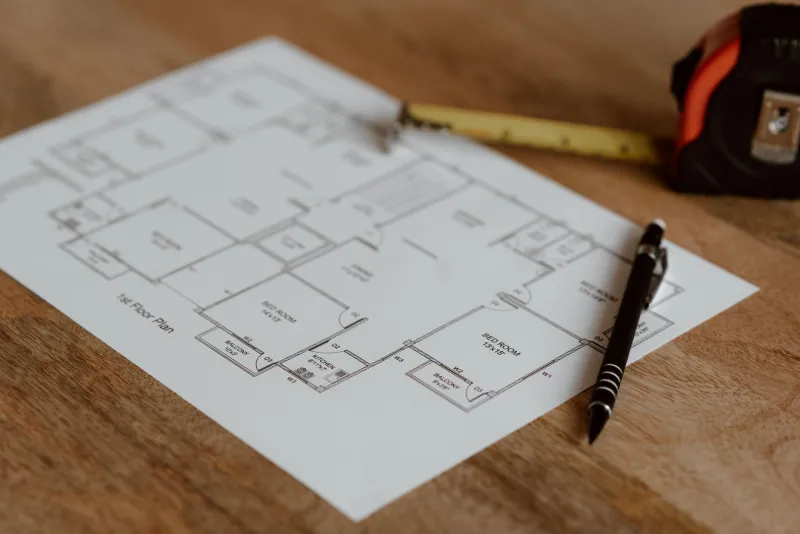
Photo by Photo by Becca Tapert on Unsplash on Unsplash
On a commercial project, the superintendent is the person who turns a schedule into a sequence and a set of drawings into a working site. By week twelve, a good superintendent knows which subcontractor's foreman needs a phone call before the morning meeting, which corridor hides a conflict between mechanical and electrical, and which inspection is likely to slip if the framing crew gets ahead of itself. That knowledge is not written in the contract. It is carried in the field.
When that person leaves, the project does not simply lose an employee. It loses a working memory. Most construction contracts are silent on this risk. They name a general contractor, require insurance, and set a schedule. They do not name the superintendent, require notice of a change, or define what a proper handoff looks like. That silence is a key-person risk, and it deserves a contract provision.
The Key-Person Risk Nobody Writes Down
Owners routinely protect themselves against subcontractor default, payment failure, and scope gaps. They rarely protect themselves against the departure of the field leader who makes the daily decisions. The risk is not hypothetical. Superintendents retire, move to other firms, take medical leave, or are reassigned to a project that the contractor considers more urgent. A replacement may be competent and still cost the project weeks of momentum.
The cost shows up in small ways at first. A new superintendent asks questions that were already answered. A subcontractor tests the new leader's authority. A sequence that was understood by everyone in the trailer is suddenly open for debate. By the time the project recovers, the schedule has absorbed a delay that no single change order explains.
Name the Superintendent, but Do Not Stop There
A named-superintendent provision is a reasonable starting point. It requires the contractor to identify the individual who will lead the field and to treat a change as a contract event. But a name alone is not a succession plan. The provision should also state the minimum experience and qualifications for a replacement, the owner's right to interview that replacement, and the contractor's obligation to propose one within a defined period.
The goal is not to micromanage staffing. It is to make field leadership a visible project commitment rather than an internal assignment. When the superintendent is named in the contract, the contractor has a reason to think twice before pulling that person to another job. The owner has a basis for asking questions if the name changes.
Notice Is a Schedule Tool
Transition notice is often treated as a courtesy. It should be treated as a scheduling requirement. If a superintendent is leaving, the owner and the contractor need enough time to overlap the outgoing and incoming leaders. A two-week overlap can be the difference between a handoff and a reset. A notice provision should require the contractor to inform the owner as soon as the departure is known, not after the replacement has already started.
Notice also gives the owner time to adjust inspections, owner-vendor meetings, and subcontractor coordination. A field leader's exit is not just a personnel event. It affects the rhythm of the job. The contract should recognize that rhythm as a project asset.
Knowledge Transfer Needs a Format
Asking a departing superintendent to brief a replacement is not a knowledge-transfer requirement. It is a conversation. A useful requirement defines what must be transferred and in what form. The outgoing leader should be required to update the site logistics plan, the look-ahead schedule, the open-issue log, the inspection record, and the subcontractor contact list. Those documents should be reviewed with the replacement and acknowledged in writing.
The format matters because field knowledge is often informal. A superintendent may know that a particular inspector prefers a certain sequence, or that a delivery gate is unusable on Fridays. Some of that knowledge will never fit in a document. But the project record should capture the decisions, commitments, and open risks that the next leader will inherit. Without that record, the handoff depends on memory, and memory leaves with the person.
A Handoff Protocol for the Field
A practical handoff protocol has four parts. First, a joint site walk with the outgoing superintendent, the incoming superintendent, the owner's representative, and the general contractor's project manager. Second, a review of the schedule, open change orders, pending submittals, and inspection status. Third, a meeting with the major subcontractors to confirm responsibilities and communication paths. Fourth, a written transition memo that lists open items, assigned owners, and dates.
The protocol should be triggered by any change in field leadership, not only a departure. A promotion, a reassignment, or a temporary absence can create the same risk. The point is to make continuity a process rather than a hope.
What It Costs to Ignore
Owners sometimes resist adding superintendent provisions because they seem like another layer of contract administration. That view underestimates the cost of a bad handoff. A delayed inspection, a missequenced trade, or a missed owner decision can consume more time and money than the clause would ever save. The provision does not guarantee a smooth transition. It does create accountability for one.
A commercial project is a collection of promises made over months. The superintendent is often the person who keeps those promises in view. Treating that role as a named project asset is not a sign of distrust. It is a recognition that field leadership is too important to leave to a staffing decision made without the owner in the room.