Pretty on Paper, Priced in the Dark: Why Conceptual Designs Fail the Bid Test
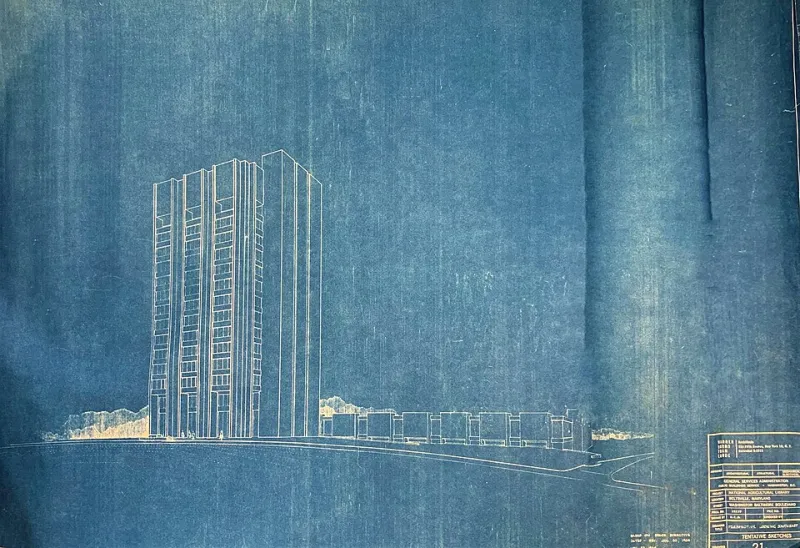
Photo: Warner, Burns, Toan, and Lunde architecture firm, Public domain, via Wikimedia Commons
Every commercial client has seen one: the conceptual design package that looks finished. Renderings with realistic daylight, floor plans with clean circulation, a few material boards pinned to a PDF. It reads like a project you could break ground on next quarter.
Then the bids arrive forty percent over budget, and the conversation turns uncomfortable. Nobody lied. The design was never priced — it was only drawn.
The Gap Between Drawn and Priced
Conceptual design and cost estimation answer different questions. A designer asks what the space could be. A cost consultant asks what each decision costs, in current market conditions, with the labor and materials actually available in your region. When those two exercises happen in isolation, the gap between them is where budgets die.
The problem is structural, not personal. Design professionals are typically compensated to produce a vision, and early renderings are part of the sales process for the project itself. Pricing that vision requires assumptions about structure, mechanical systems, site conditions, and market pricing — none of which the designer may have been asked to resolve. So the package moves forward on aesthetics alone, and the client invests in design development before anyone has tested the number.
By the time a contractor or estimator sees the drawings, the fees are sunk. Changing direction now means redesigning, which means more fees, more delay, and a client who feels cornered into approving a budget they never agreed to.
Where the Cost Reality Hides
Certain elements are chronically under-examined in early design packages:
- Structural assumptions. An open plan drawn without columns may require steel that was never budgeted.
- Mechanical scope. Removing or relocating systems in an occupied building can cost multiples of what a shell-and-core approach would.
- Code and accessibility upgrades. A change of use or occupancy can trigger restrooms, egress, and fire-protection work that no rendering captures.
- Site and logistics. Limited staging areas, restricted delivery windows, and occupied-floor phasing all carry real dollars that never appear on a plan sheet.
- Finish ambiguity. "Owner-selected finishes" is not a line item; it is an open liability until someone assigns it a number.
None of these are exotic. They are the ordinary friction of American commercial construction, and they are exactly what a cost-consultant or experienced contractor looks for before a package goes out the door.
Early Involvement Changes the Math
Bringing construction or cost expertise into the design phase does not mean letting the builder run the project. It means stress-testing decisions while they are still cheap to change. A constructability review at schematic design can flag a structural move that would cost $200,000 to fix after permits. The same flag, made early, might cost $20,000 — or nothing, if the design simply adjusts.
This is the logic behind preconstruction services, cost estimates at each design milestone, and contractor input on systems selection. Each intervention converts a surprise into a decision. Decisions are manageable; surprises at bid time are not.
For clients, the discipline is simple to describe and rare in practice: no design phase should proceed past a milestone without a cost estimate attached, and no estimate should be accepted without knowing what assumptions sit underneath it.
A Framework for Judging Bid-Readiness
Before releasing a design package to the market, ask these questions. If the answers are weak, the package is not ready, and bidding it will only generate change orders later.
1. Is there a current estimate tied to this exact drawing set? Not a square-foot allowance from six months ago — an estimate matched to the actual scope, with the date and market assumptions stated.
2. Are the major systems named, not implied? Structural approach, HVAC type, and electrical service capacity should be identifiable from the documents.
3. Are code triggers documented? If the use, occupancy, or egress strategy changed, someone should have confirmed the regulatory consequences in writing.
4. Is the finish level quantified? Even a budget-grade specification per room gives bidders something real to price. Blanket allowances invite padded numbers.
5. Are site and logistics constraints described? Access hours, staging, phasing in occupied space — anything that shapes the contractor's cost of doing business.
6. Does the package include the exclusions? A bid-ready set states clearly what is not included, so the low number you receive means what you think it means.
The Cost of Waiting
The temptation is always to keep design and pricing separate until the design is "done." But design is never done; it is only frozen by budget or by deadline. The cheapest moment to influence cost is the moment when the design is still soft — and that moment passes quietly, one approval at a time.
Clients who treat pricing as a design input, rather than a design verdict, consistently land closer to their number. Clients who treat it as a final exam often fail it in public, with three bids on the table and no good option among them.
The blank floor plan problem is not a design failure. It is a sequencing failure — and sequencing, unlike rendering, is something a client can control.